3 min read
Europe's Innovation Problem: Labour Rules, Cookie Banners and Why AI Talent and Capital Go Elsewhere
Europe has the talent but keeps driving out business, investment and innovation. Labour rules, GDPR cookie banners, blocked features, and what targeted reform could fix.
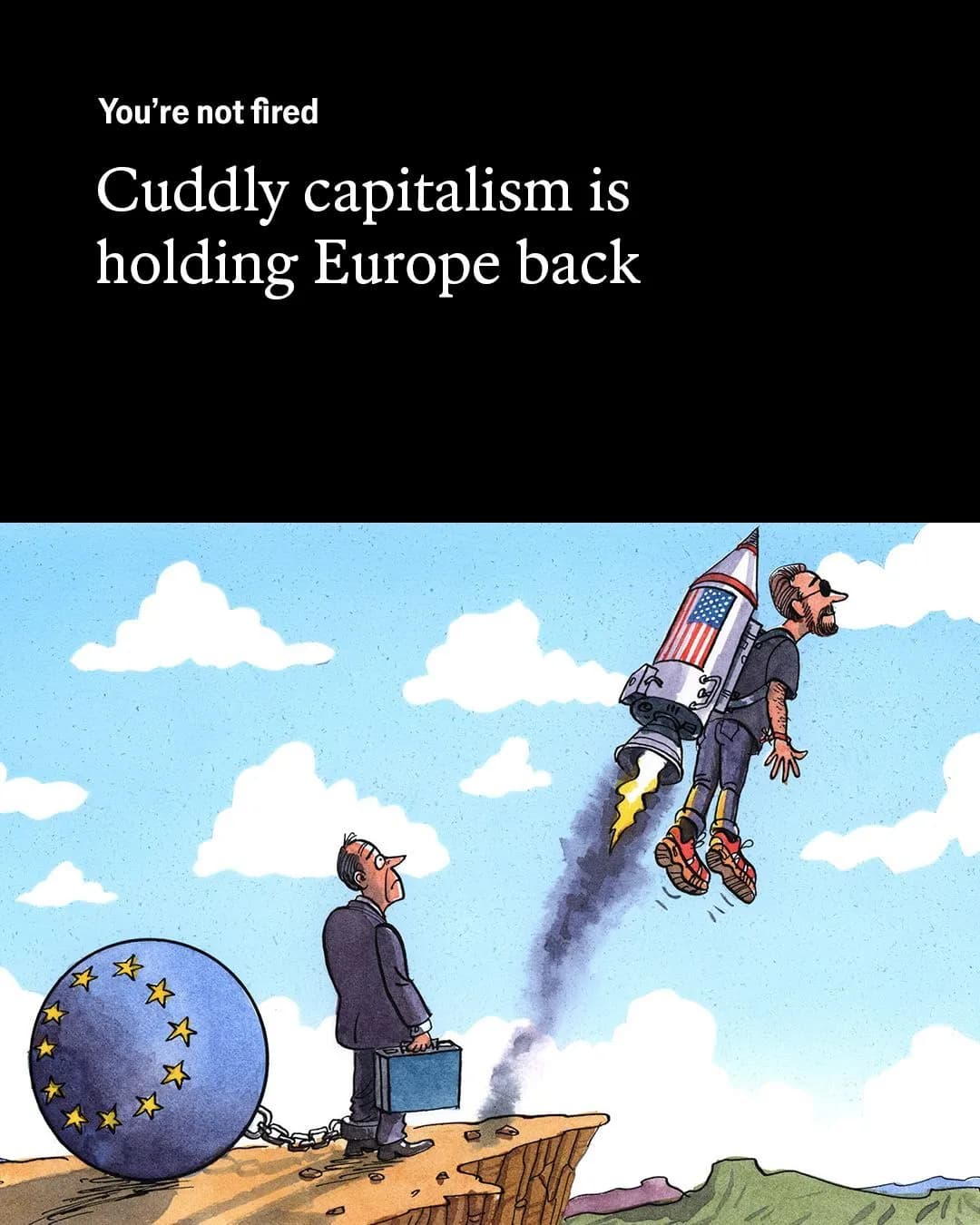
Why hire that brilliant AI engineer if you're terrified of the bureaucratic apocalypse that might follow a pivot away from yesterday's project?
Labour rules from the 20th century
The Economist made the case well in How Europe crushes innovation: labour rules devised in the 20th century are hobbling Europe in the 21st.
If Europe wants to uncork its potential, it doesn't need to copy America's Wild West entirely. Targeted reforms could loosen the chains. Innovation thrives on bold pivots and generous venture capital bets, and both get harder when hiring someone feels like a commitment you can never undo.
Europe has the brains and the history of breakthroughs, CERN and mRNA vaccines among them. It just needs to stop treating talent like a fixed asset on a balance sheet. The EU needs more lax rules and tax breaks to attract capital and innovation.
"Europe has a real problem"
In December 2025 Jamie Dimon said it bluntly:
"Europe has a real problem. They've driven business out, they've driven investment out, they've driven innovation out."
Harsh? Yes. Politically incorrect? Maybe. True? The data says yes. The EU's share of global GDP went from 25% in 2008 to 18% today. The VC funding gap with the US is 1 to 3 and widening.
Europe still has incredible talent, universities and lifestyle. But talent plus lifestyle doesn't equal growth if bureaucracy and energy costs kill the economics.
The cookie banner
In November 2025, Brussels moved to strip protections from GDPR, including simplifying its infamous cookie permission pop-ups, and to relax or delay landmark AI rules, in an effort to cut red tape and revive sluggish growth (The Verge).
Honestly, literally nobody cares about the cookie banner. It is one of the worst things in the history of the internet, only creating frustration for developers, users and site owners. If this is the start of Europe admitting some rules simply don't work, good.
Blocked features, again
A couple of months earlier, Apple's AirPods Pro 3 speech and translation features were blocked in the EU, waiting for Brussels' blessing. Meanwhile the rest of the world enjoys seamless tech while the EU debates. Also the EU: we have to innovate more and drive enterprise.
Meanwhile elsewhere
While most countries are still faxing forms and drowning in paper trails, the UAE runs TAMM: an app with 950+ government services in one platform, AI-powered assistants, predictive analytics and digital documents via UAE Pass. Pay bills, renew visas, or get a camel grazing license, in seconds. I haven't used it myself, but it's a clear example of what digital government with AI can look like.
It does raise an uncomfortable question I keep coming back to: why are less democratic countries like China, Singapore, the UAE and Qatar so far ahead on this?
What Europe should do
None of this is about talent. Europe has it. It is about the rules around that talent: how hard it is to hire, pivot, raise money and ship. Fix those, and the engineers, the capital and the companies will stay.