1 min read
2026 Is the Year of Blind Trust: LLMs as Generative Compilers
Who still reviews the assembly or machine code of their C++, Rust, Go or Java applications? Nobody. We trust our compilers, transpilers and interpreters blindly, and 2026 is when we start trusting LLMs the same way.
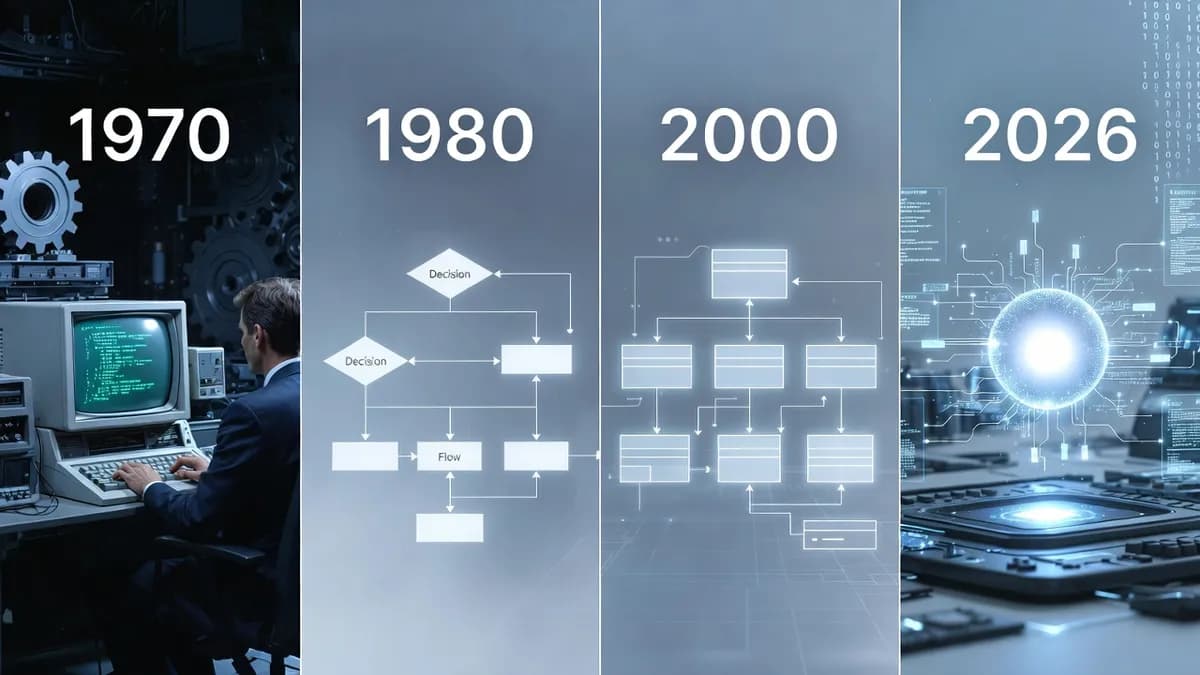
Software engineering has always progressed by delegating more to machines. Early developers manually managed memory, registers and concurrency. As systems grew too complex for human oversight, compilers took over, translating high-level code to machine instructions with total reliability. Today, no serious engineer audits the assembly output of Rust, Go, C++, Java or .NET compilers. We trust the toolchain completely.
By 2026, this same blind trust extends to LLMs acting as generative compilers. Instead of translating syntax to binary, these models translate English-language requirements directly into working code. The industry is reaching the tipping point where LLMs are treated with the same mission-critical confidence as traditional compilers, despite their probabilistic origins, thanks to rapid advances in verification, logic checking and safety tooling.
This shifts human work from low-level syntax implementation to systemic orchestration: designing high-level architecture, crafting precise prompts, and validating complex logic flows.
The death of syntax as a core skill
Mastery of language grammar and manual debugging is rapidly losing economic value. The keyboard is becoming a refinement tool, not a creation tool. The most valuable skill in 2026 is prompting: the ability to precisely articulate architectural intent and direct intelligence at scale. The modern developer is no longer a coder. They are a prompter, an architect of intent who manifests entire systems through language.
The future belongs to those who stop writing code and start directing the machines that write it.