2 min read
Self-Driving Cars in Europe: Tesla FSD, Spain's Nationwide Tests and Why Blocking Autonomy Costs Safety
Spain approved nationwide Tesla FSD Supervised tests and more European countries are following. Why blocking driver assistance in the name of competition costs safety.
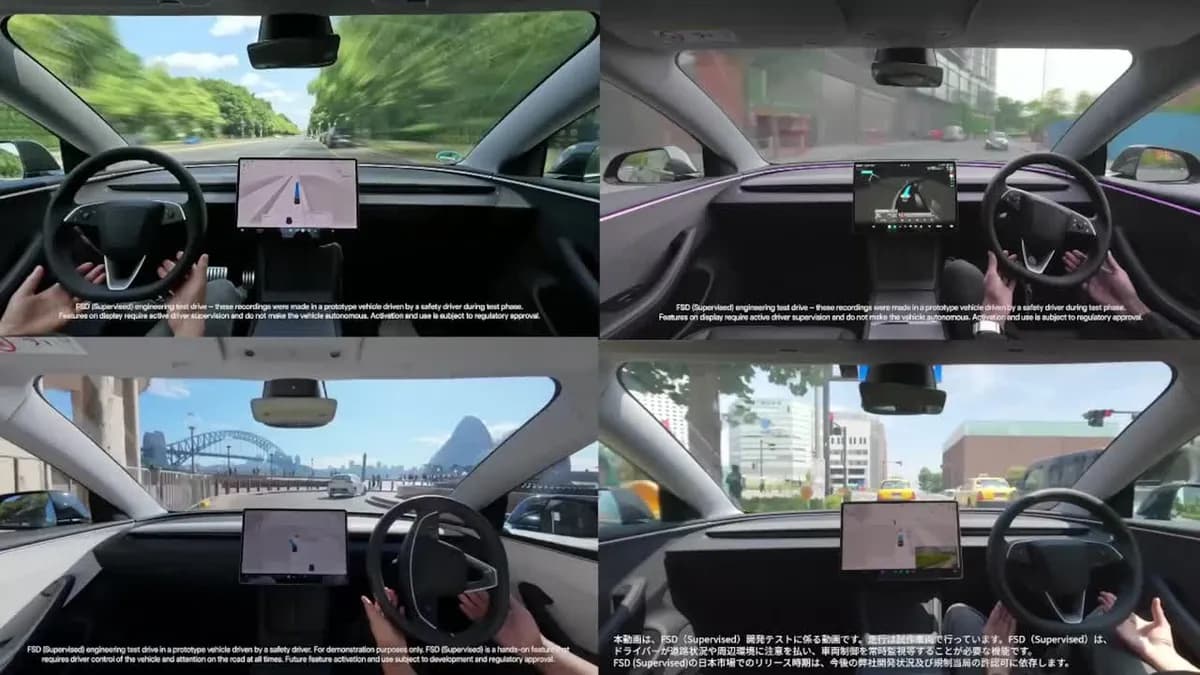
Spain approved Tesla Full Self-Driving tests nationwide. Great work, Spain.
Spain's nationwide FSD tests
The approval allows tests without a safety driver but with remote monitoring. These Level 2 systems, like Full Self-Driving Supervised, run as "automated tourism" from mid-2025 through October 2027 on any Spanish road, with no incidents so far.
A public dashboard tracks progress transparently, which positions Spain as a key testing ground in Europe's push for harmonized autonomous vehicle rules.
Blocking safety and calling it competition
Not every regulator sees it this way. In the summer of 2025 I wrote:
Today every Tesla driver is disengaging from autopilot to check their phone notifications, because, let's be honest, almost all young drivers are checking their phones regardless. So instead of enabling safer technology, the European Commission is stifling safety by calling it "unfair competition".
People are already distracted behind the wheel. The question is not whether drivers look at their phones. It is whether the car can drive safely while they do.
What Tesla says about the numbers
Tesla publishes its own safety claims, and they are worth reading with that in mind. In its 2024 Q4 shareholder update, Tesla said FSD was improving rapidly and on track to exceed human safety levels, that it was preparing Robotaxi services in parts of the US, and that it planned to expand FSD Supervised to Europe and China in 2025. It reported that Teslas with Autopilot drove 5.94 million miles per accident, against a US average of 0.70 million miles. It also deployed Cortex, a training cluster of about 50,000 H100 GPUs at Giga Texas.
The 2024 Tesla Impact Report claims Autopilot is nearly 10 times safer than a human driver, and frames autonomy as giving people time back: people spend nearly two hours a day on chores, and autonomy will extend beyond the road to homes and factories, with Optimus, Tesla's humanoid robot, automating boring, repetitive or unsafe tasks.
Not every system is equal
Autonomy isn't magic, and not every system is equally good. I once shared one and a half hours of autonomous cars crashing, with Chinese commentary: a closed-highway test of 36 cars and 216 crashes. Tests like that are how these systems should be judged, side by side, rather than by headlines.
Europe is starting to move
By June 2026, self-driving cars were coming to Europe, with a few countries already approving them. That is good news.
Europe tends to regulate first and ship later. With autonomy, waiting has a cost that is measured in accidents, not only in market share. The sooner more countries follow Spain, the better.